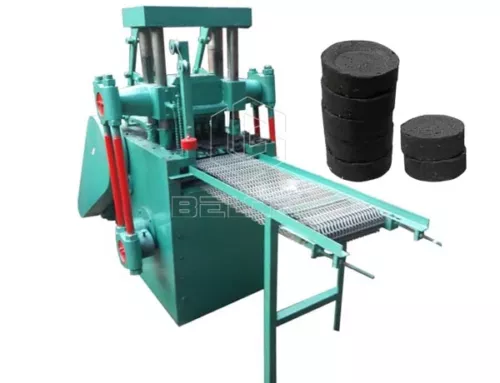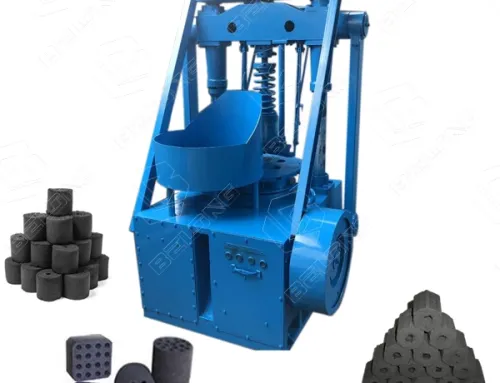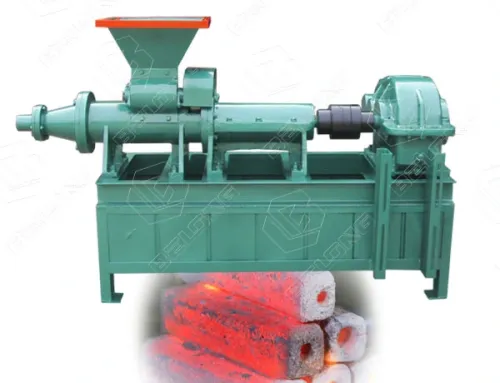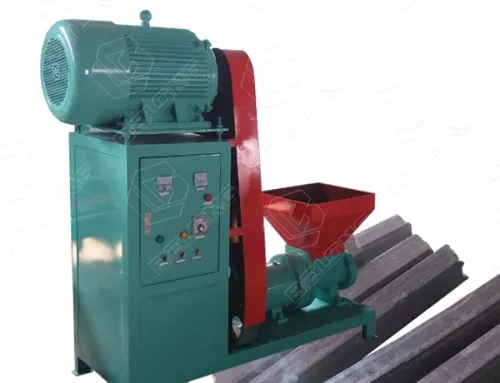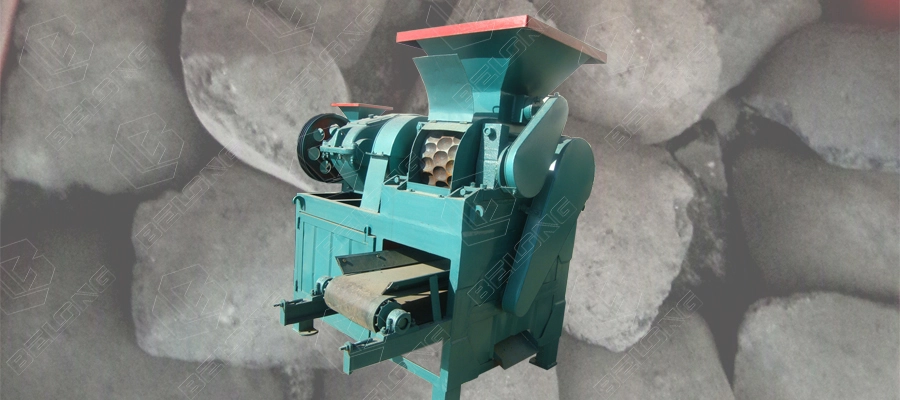
Charcoal ball press machine is an equipment used to compress charcoal or coal powder into spherical or oval shapes briquettes (Other shapes can also be customized). It is widely used in the production of coal briquettes and charcoal briquettes for barbecue, heating, cooking, and metallurgy, etc.
Raw Material
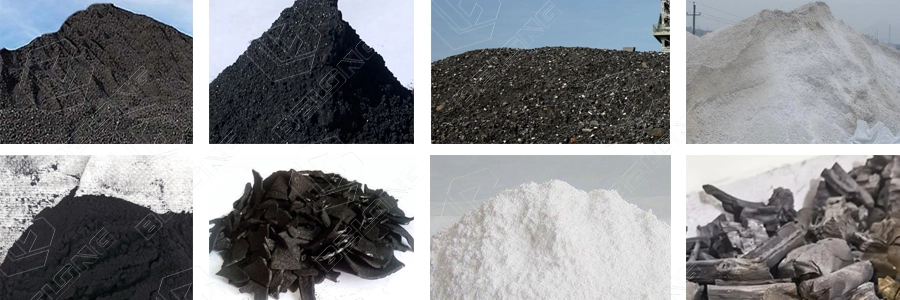
The charcoal ball press machine can be used to press various powdery materials such as charcoal / coal powder, iron powder, coking coal, activated carbon, etc.
The powdery material needs to meet the requirements below:
- Size: less than 5mm.
- Moisture: around 30%.
- Binder: a binder is needed to make solid charcoal briquettes.
Finished Products
- The charcoal briquettes made by this charcoal ball press machine are smokeless, non-toxic, odorless, environmentally friendly, easy to use, with little fly ash, stable heat emission and quality.
- The finished briquettes is suitable for outdoor or indoor barbecue with ventilation facilities.
- They have a large heat value, and burn longer than traditional charcoal does.

Technical Parameter
| Model | Power | Capacity | Machine size |
|---|---|---|---|
| 290 | 5.5kW | 2-3t/h | 1.25*1.25*1.4m |
| 360 | 7.5kW | 3-4t/h | 1.5*1.5*1.8m |
| 430 | 15kW | 4-6t/h | 1.7*1.7*1.8m |
At Which Step in the Charcoal Briquette Production Line Is the Charcoal Ball Press Machine Used: STEP 4
Step 1: Carbonize the raw material with a carbonization furnace
Step 2: Crush the carbonized material with a professional charcoal grinder
Step 3: Mix the powdery material with a charcoal mixer
STEP 4: Compress the mixed material to charcoal briquettes with a charcoal ball press machine
How The Charcoal Ball Press Machine Works
The powder material evenly enters the hopper of the charcoal ball press machine, and then evenly enter the middle of the opposite roller. The opposite roller operates in the opposite direction at the same speed, and the molding pressure changes from small to large. The molding pressure reaches the maximum value at the center line of the opposite roller. After the raw material passes the line, the molding pressure decreases rapidly to make the charcoal briquettes enter the dropping state.