How to turn wood waste into profit is an excellent question that has inspired many successful businesses. In the woodworking and timber processing industries, wood waste is generated in massive quantities. Whether it is hardwood, softwood, particleboard, plywood, composites, OSB, or MDF—waste is inevitable. However, when you shift your perspective and view this waste not as rubbish, but as a valuable raw material for a new product, everything changes. Wood briquettes are the ultimate product to turn that waste into wealth!
Here we will discuss how to Turn Wood Waste Into Wealth with wood briquettes related machines.
Wood Briquettes Related Machines
This wood waste typically originates from the furniture industry, as well as from sawmills and planing mills. A wood briquette machine efficiently compresses these loose residues and byproducts into briquettes of various shapes and sizes. The finished briquettes can then be utilized as a high-efficiency fuel or sold directly for a substantial profit!
To make wood briquettes, generally, it requires 3 steps:
- Crush the wood materials to sawdust with a size of less than 5mm.
- Dry the sawdust to <15% humidity.
- Convert sawdust into sawdust briquettes
Below, we will take a closer look at each machine in the production line
Wood Crusher Machine (for required size)
For optimal briquetting, the required raw material size is under 5 mm. However, most wood waste—such as wood shavings, chips, and scraps—comes in much larger sizes and irregular shapes. Therefore, a wood crusher or grinder is necessary to reduce these bulky waste materials into uniform sawdust smaller than 5 mm
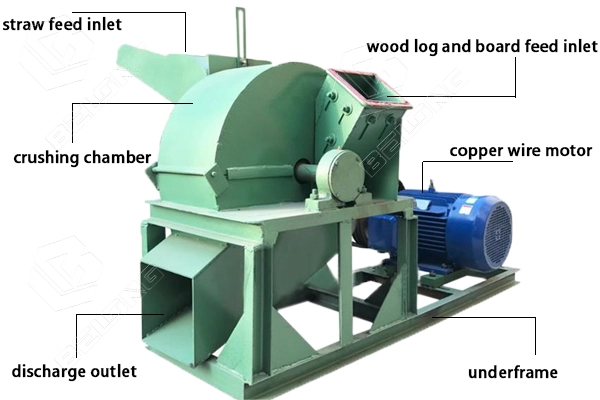
The equipment shown above is a professional wood crusher designed to handle not only wood waste but also logs and tree branches. It is widely utilized to produce high-quality sawdust, serving as the ideal pre-treatment solution for both wood pellet and charcoal briquette plants.
Sawdust Dryer Machine (for required humidity)
Proper moisture content plays a critical role in the briquetting process; if it is too high, the sawdust will not bind or form shapes easily. For high-quality wood briquettes, the raw material’s moisture should be strictly controlled below 15%. Thanks to the crushing stage in the previous step, the wood waste is reduced to fine sawdust, making it significantly easier and faster to dry to the ideal moisture level.
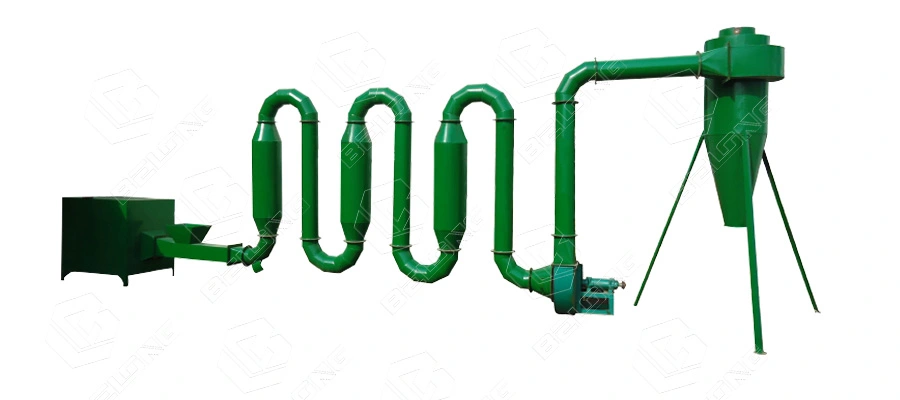
The image on the left showcases our air flow dryer (flash dryer). It consists of a fan, a heat source, drying pipes, and a cyclone separator. During operation, sawdust or wood chips are fed into the drying pipe, where they come into direct contact with high-temperature air. The moisture evaporates rapidly and is carried away by the airflow, while the dried material moves through the pipe. Finally, the cyclone separator efficiently separates the dry sawdust from the air and collects the finished product.
In addition to the air flow dryer, there is also a rotary drum dryer that is more suitable for production lines with higher production demands.
Briquette Machine (for required shape)
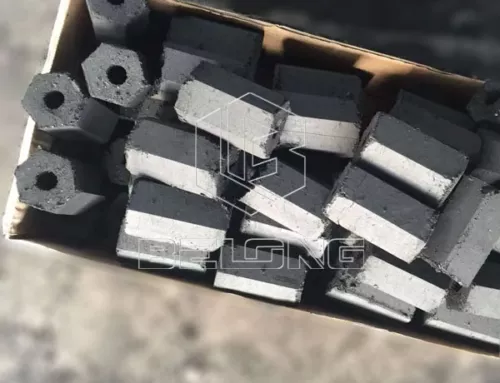
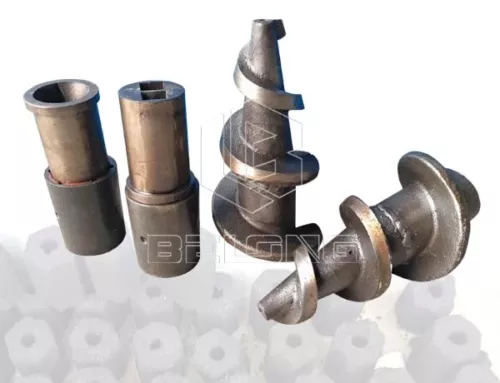
Now, we arrive at the final step. Having been crushed to the required size and dried to the optimal moisture content, the wood waste is perfectly prepared for briquetting. The wood briquette machine typically compresses these materials into hollow square or hexagonal shapes. Generally, the finished sawdust briquettes feature an outer diameter of approximately 50 mm
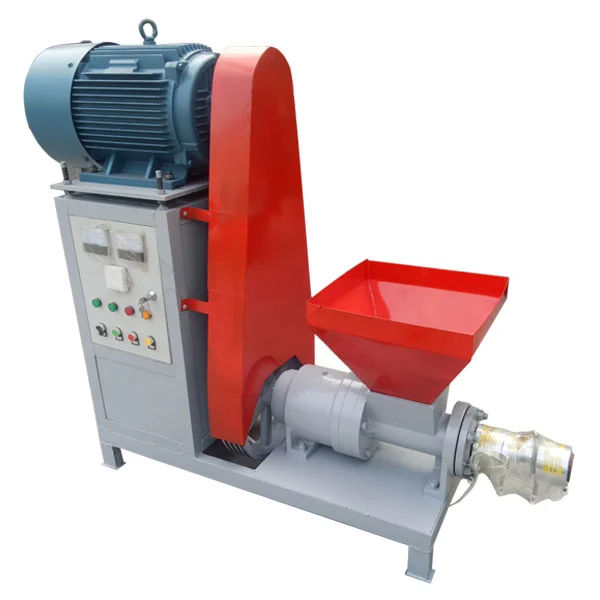
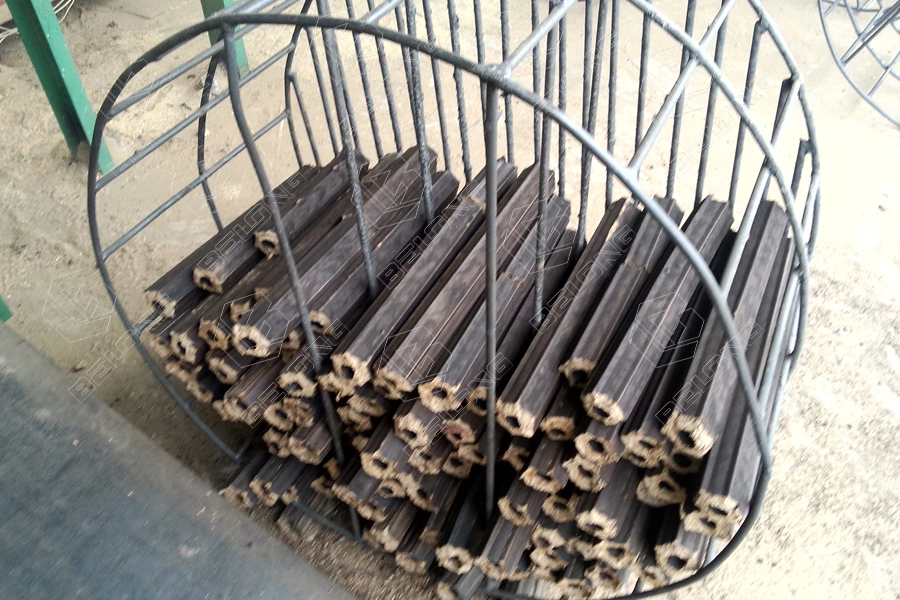
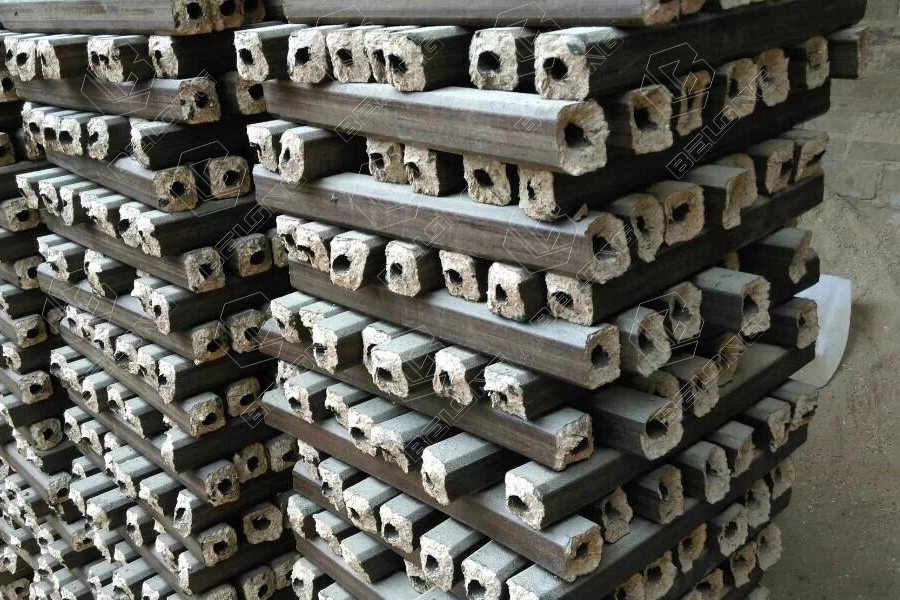
The density of wood briquettes made by this machine is relatively high, and they can be used for daily-use heating, warming up greenhouses, or burning boilers.
Further Carbonization
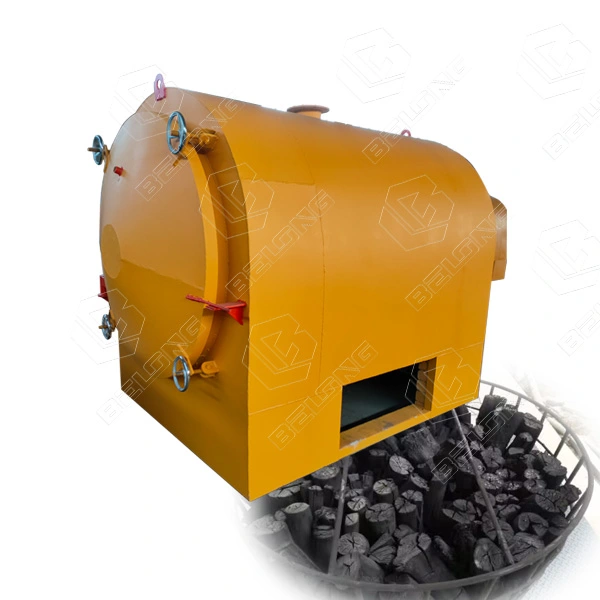
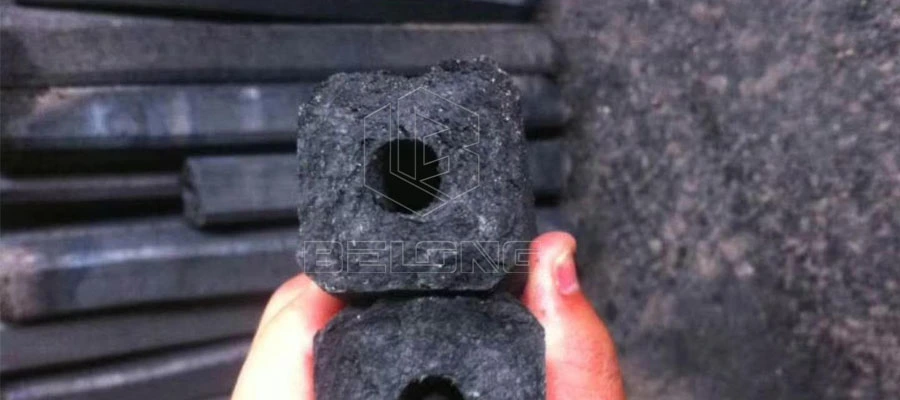
To make your briquettes even more versatile and high-value, you can convert them into charcoal. This transition involves just one key process: carbonization. By simply adding a carbonization furnace to your production line, you can easily achieve this. Alternatively, if you prefer to minimize initial investment, you can build a traditional earth kiln for charring, which is the time-tested method. The resulting carbonized sawdust briquettes are smokeless, odorless, and possess a high calorific value, offering an exceptionally long burn time.
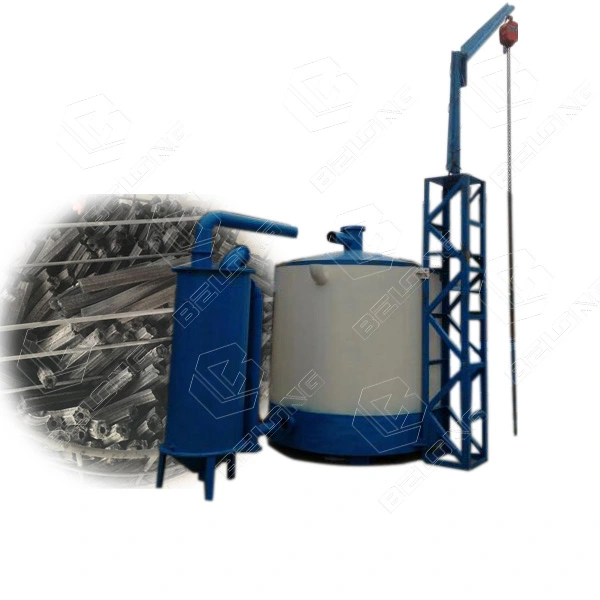
vertical carbonization furnace