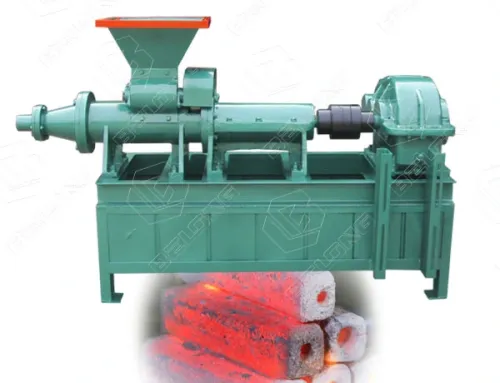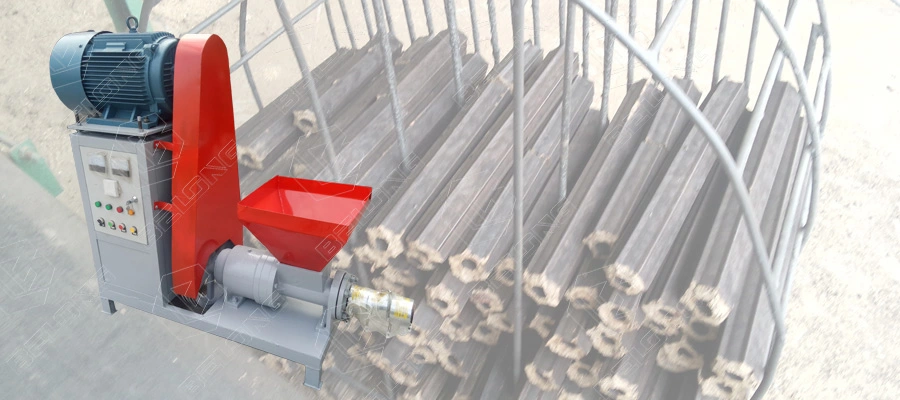
Sawdust briquette machine is the main equipment that uses carbon containing wood materials such as wood, rice husks, peanut shells, and plant straw (without adding any additives) to produce rod-shaped solid fuel under high pressure and high temperature conditions.
The briquette machine, also known as the wood powder forming machine, woodchips briquettes making machine, rice husk briquettes machine, wood sawdust briquettes making machine, etc. It is the main forming equipment for producing machine-made charcoal. It is a screw-type extruder, which is widely used to compress granular biomass materials into briquettes with specific shapes.
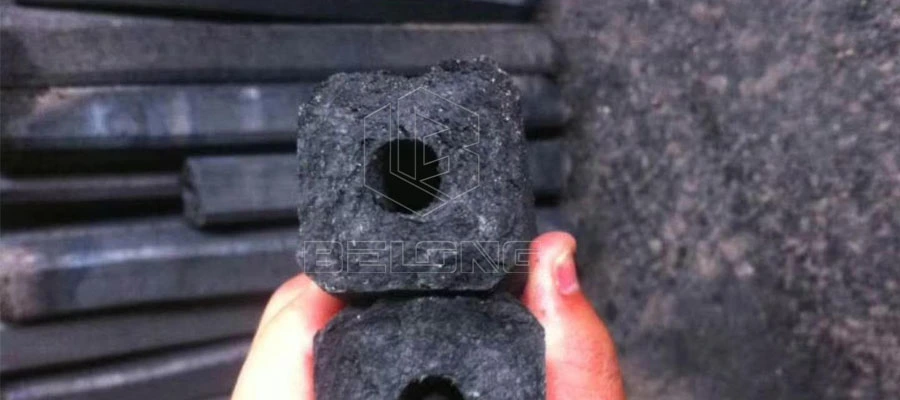
It can extrude granular (length ≤ 5mm, diameter ≤ 3mm) waste materials such as bamboo, wood, fruit shells, straw with a moisture content of<12% into solid fuel rods with a central hole through high-temperature and high-pressure processes without adding any binder.
These hollow briquettes have two shapes for choice, square or hexagonal. Generally, the outer diameter range of the briquettes is 50 or 70mm.
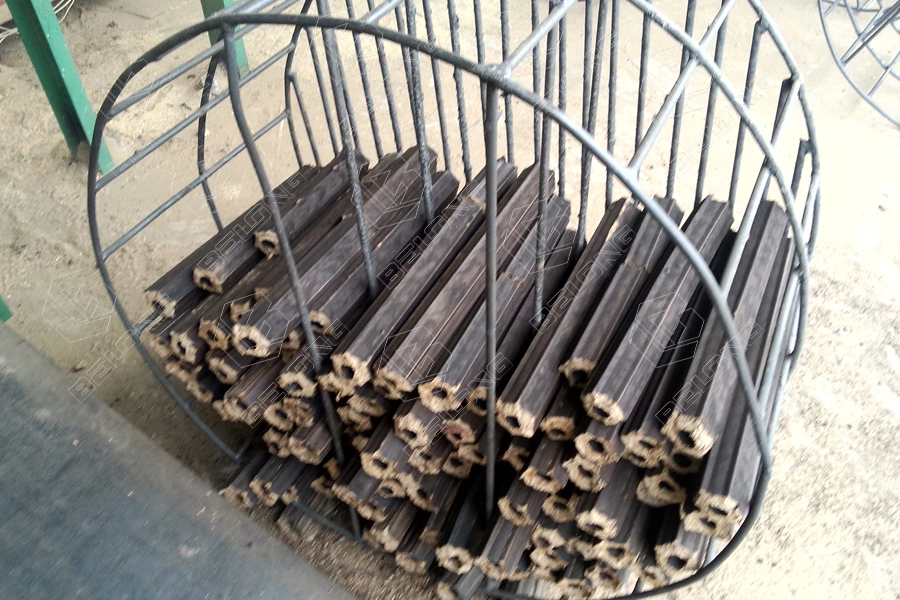
hexagonal wood sawdust briquettes
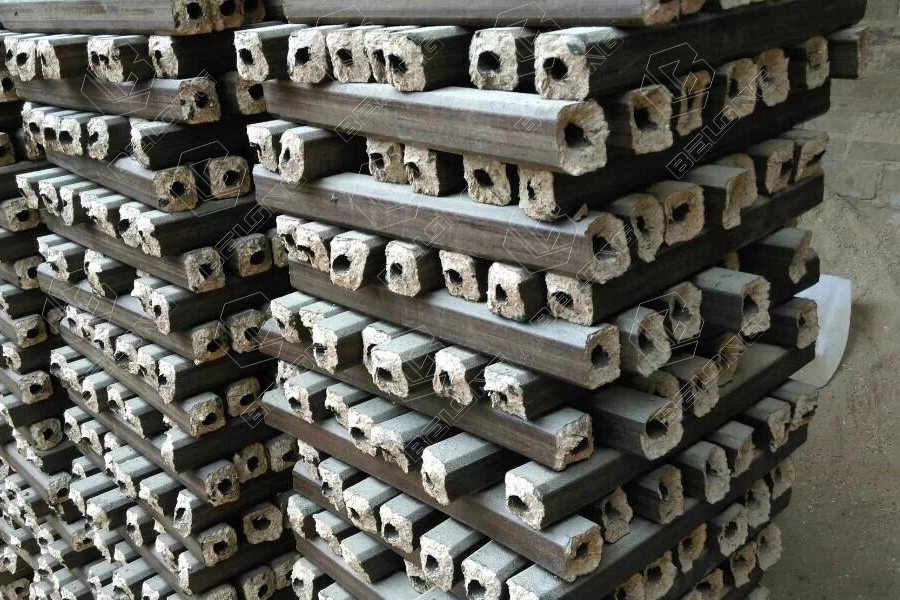
square rice husk briquettes
When the raw materials we use to make charcoal are not suitable for carbonization first, we may choose to firstly crush them into sawdust or sawdust powder, dry them, then use the wood sawdust briquette machine to compress them into square or hexagonal rod-shaped briquettes, and finally use a horizontal or vertical carbonization furnace to carbonize the finished briquettes.
Note: The raw materials of this briquettes extruder machine are unlike that of the charcoal briquettes extruder. Sometimes customers confuse the two. The former is made from uncarbonized sawdust, rice husks, etc., while the latter is made from charcoal powder or coal powder, which may come from carbonized waste wood, fruit shells, tree branches, etc.
Raw materials that can be processed
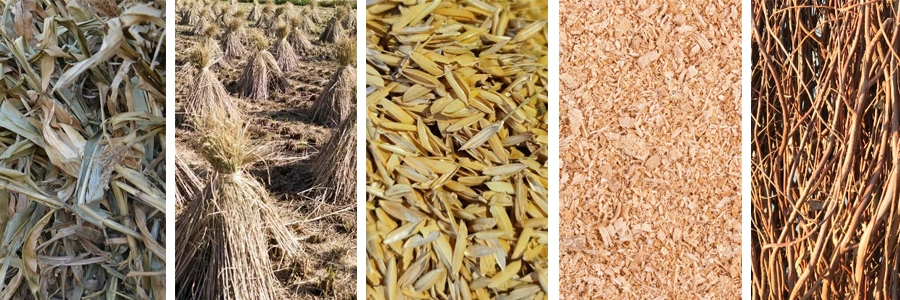
- Wood and wood processing waste—firewood, wood pellets, and wood chips, wood shavings, lumber and furniture mill sawdust and waste
- Agricultural crops and waste materials—crop straw (corn stalk, soybean stalk, sorghum stalk, cotton stalk, rape stalk, peanut shell, sunflower stalk), chaff, grass, shrub branch, bamboo, coconut shell and bagasse
Preparation Before Briquetting
Beforing entering the sawdust briquette machine, the above biomass material should be preprocessed to meet the following requirements.
If your raw material is larger than 5mm, the wood sawdust crusher machine can be used to process the raw materials to required size.
As for humidity, there is a specialized sawdust dryer that can quickly reduce the moisture in the raw materials to the required humidity.
Only sawdust that meet the size and humidity requirements can produce the best briquettes.
You can use your own method or you can use the equipment we provide to handle the crushing and drying steps. Both the wood crusher machine and the sawdust air flow dryers are very cheap, but easy to operate. They can help to make your entire charcoal production process smoother.
Structure of the sawdust briquette machine
The sawdust briquette extruder machine consists of a Feeding Hopper, Screw Propeller, Heating Coil, and Forming mold. The propeller rotates and compresses the biomass materials, forcing them through the forming mold to produce briquettes of various shapes and sizes.
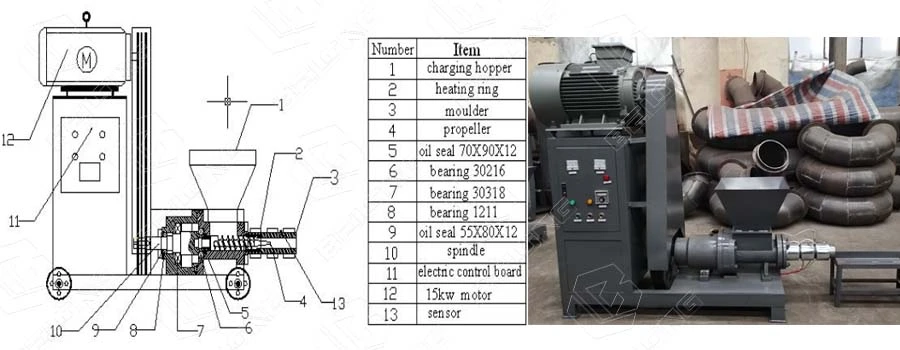
Spare Parts
The raw materials are first crushed by a wood crusher machine, and under the action of a screw propeller and a heating coil, a high-temperature and high-pressure zone is formed to process the loose raw materials into hollow briquettes. The briquette has high density, small volume, and good flammability, and can replace firewood and coal.
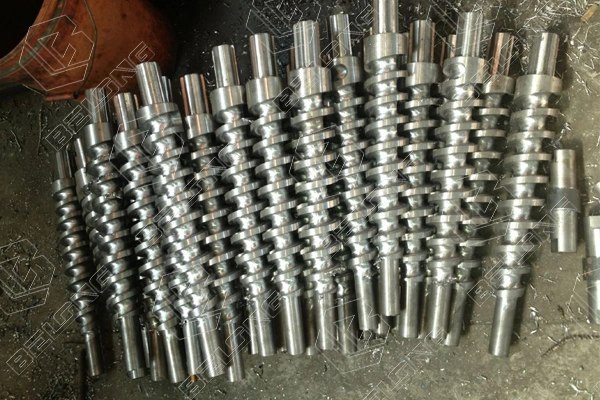
Screw Propeller
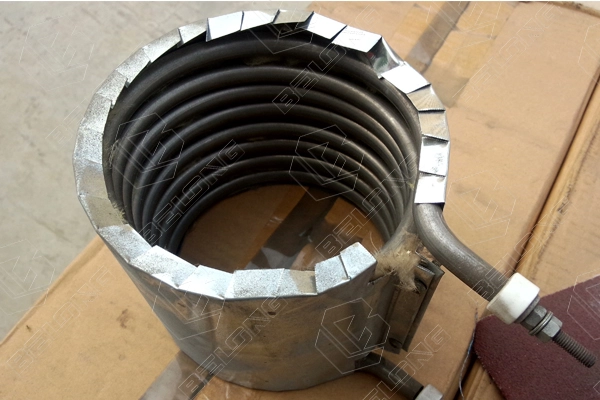
Heating Coil
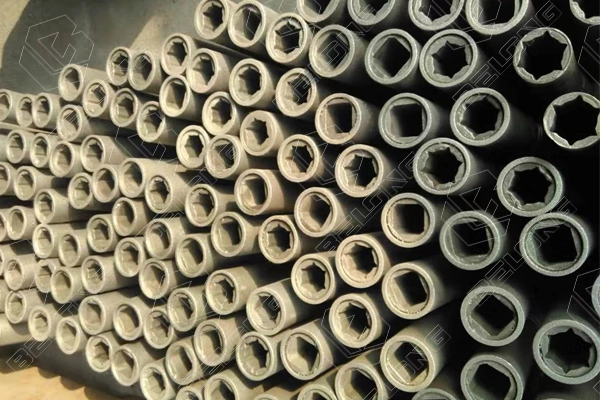
Molds
Technical Parameter
| Model | Power | Capacity | Briquette diameter | Machine size |
|---|---|---|---|---|
| ZBJ-I | 18.5kW | 150-200kg/h | 50mm | 1500*600*1600mm |
| ZBJ-II | 22kW | 200-300kg/h | 50mm | 1700*700*1600mm |
| ZBJ-III | 30kW | 300-400kg/h | 70/80mm | 1850*700*1400mm |
Sawdust Briquette Charcoal
The finished sawdust briquette is easy to ignite after carbonization, and they have a high calorific value (more than 20% higher than ordinary wood), fewer pollutants, and their specific gravity is convenient for storage and transportation, and can make full use of crop residues.
Sawdust briquette charcoal is used primarily for barbecue as it produces no odor, no smoke, little ash, high heat, and has a long burning time.
At Which Step in the Charcoal Briquettes Production Line Is the Briquette Machine Used: STEP 3
Step 1: Crush the wood material to a size <5mm with a crusher
Step 2: Dry the wood sawdust, make its humidity <12% with a dryer
STEP 3: Compress the wood sawdust to a certain shape with a briquette machine
Step 4: Carbonize the sawdust briquettes into charcoal briquettes with a carbonization furnace